The True Cost of In-House EDI vs. Outsourced EDI
By Brian Eckenrod on
The True Cost of In-House EDI vs. Outsourced
Many manufacturers and distributors evaluate EDI decisions based on software licensing or transaction fees alone. In reality, the true cost of EDI—whether managed internally or outsourced—extends far beyond tooling.
Understanding the full operational, financial, and risk implications of each model is critical before committing to a long-term approach.
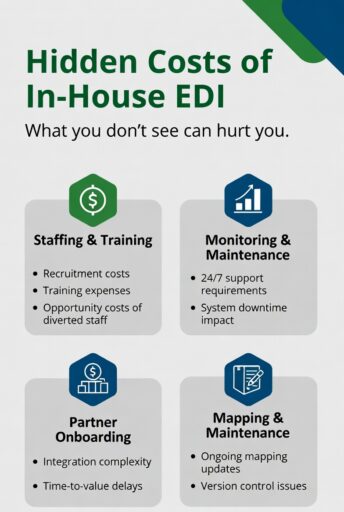
1) What “In-House EDI” Really Includes
Running EDI internally is not just about owning software. It requires sustained operational capability.
- Dedicated EDI analysts and backup coverage
- Ongoing partner onboarding and certification work
- Standards maintenance and mapping changes
- 24/7 monitoring and exception handling
- Dependency on key individuals and tribal knowledge
These costs are often distributed across teams and budgets, making them easy to underestimate.
2) The Risk Profile of In-House EDI
Beyond cost, internal EDI introduces operational risk.
- Single points of failure when key staff leave
- Delayed partner onboarding during peak periods
- After-hours incidents without coverage
- Limited visibility into transaction-level issues
These risks often surface during growth, ERP upgrades, or supply chain disruptions—exactly when EDI stability matters most.
3) How Outsourced EDI Changes the Cost Structure
Managed EDI shifts EDI from a fixed internal cost to a predictable operating model.
- Dedicated onboarding and support teams
- Defined SLAs and escalation paths
- 24/7 monitoring and proactive issue resolution
- Scalability without incremental headcount
While outsourced EDI includes vendor fees, it often reduces total cost when labor, risk, and delays are factored in.
4) When In-House EDI May Still Make Sense
In-house EDI can be viable when:
- EDI volume and partner complexity are very low
- There is deep internal EDI expertise with redundancy
- Growth and partner changes are minimal
However, as complexity increases, these conditions become harder to maintain.
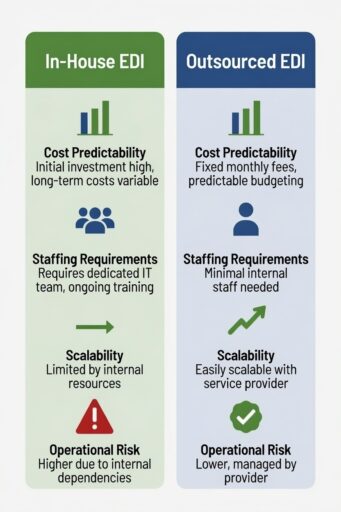
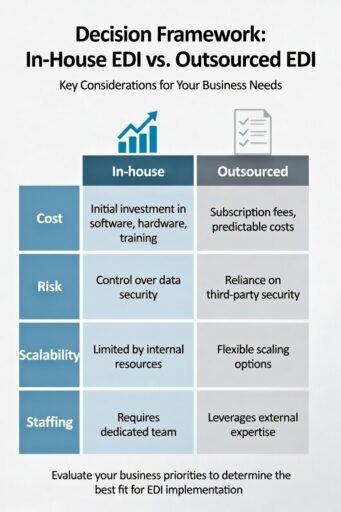
5) A Practical Decision Framework
When deciding between in-house and outsourced EDI, evaluate:
- Total operational cost (not just software)
- Staffing risk and continuity
- Partner onboarding velocity
- Monitoring and issue resolution maturity
- Ability to scale without disruption
The right choice is the one that supports growth without increasing fragility.
Conclusion
The true cost of EDI is rarely visible on a balance sheet. It shows up in delays, errors, staffing challenges, and missed opportunities.
Next step: Talk with our team to evaluate whether in-house or outsourced EDI is the right operating model for your organization.
Comments are closed