How to Choose the Right EDI Outsourcing Partner: A Practical Buyer’s Guide
By Brian Eckenrod on
How to Choose the Right EDI Outsourcing Partner: A Practical Buyer’s Guide
Outsourcing EDI is no longer just an IT decision—it’s an operational and financial one. The right EDI outsourcing partner can reduce errors, accelerate partner onboarding, and eliminate key-person risk. The wrong one can create hidden costs, integration gaps, and long-term lock-in.
This guide walks through how manufacturing and distribution leaders should evaluate managed EDI providers—what to look for, what to avoid, and how to make a decision that scales.
1) Start With Your Trading Partner Reality
Before evaluating vendors, document your real environment—not the simplified version.
- Number of active trading partners
- Top partners by transaction volume and revenue impact
- Standards in use (ANSI X12, EDIFACT, GS1 variants)
- Protocols required (AS2, SFTP, FTPS, VAN)
- Document types (850, 856, 810, 997, etc.)
A qualified managed EDI provider should ask for this information early and use it to define scope and onboarding sequencing.
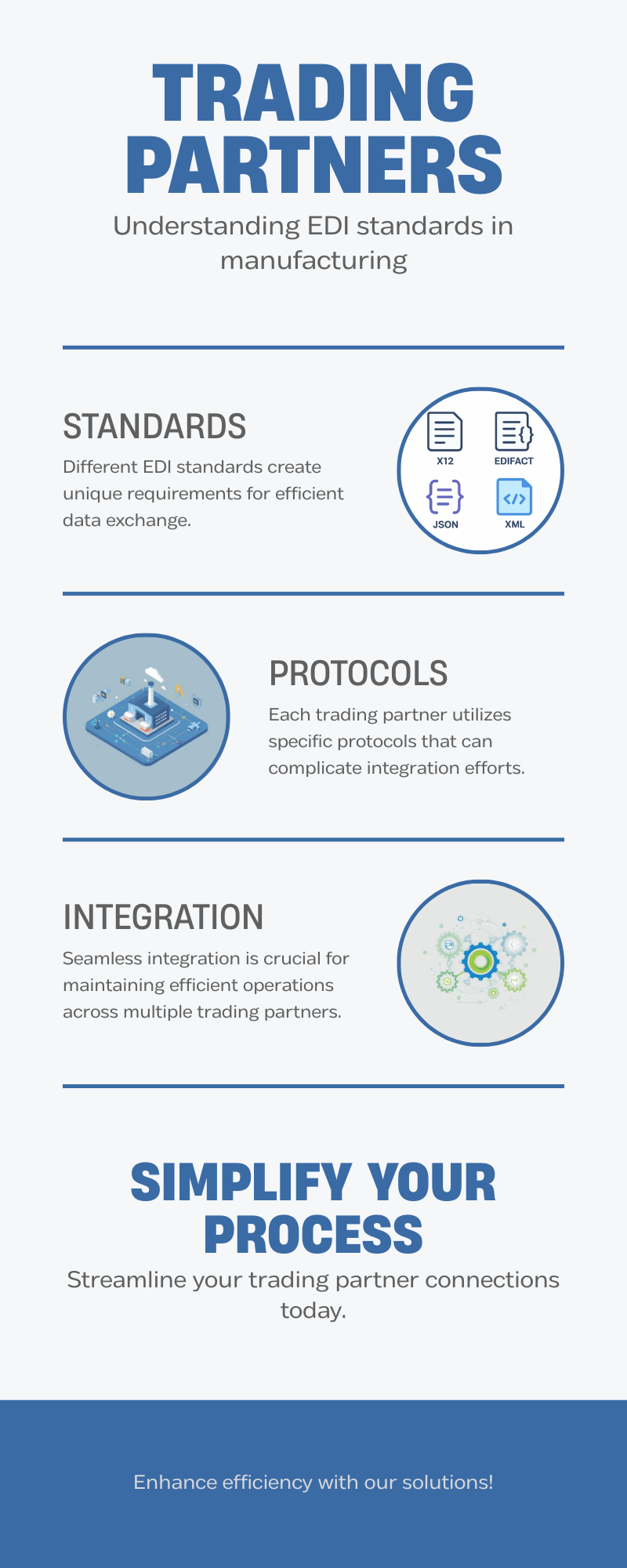
Your real partner mix defines the scope—not the vendor’s brochure.
2) Evaluate Operational Coverage, Not Just Software
Many providers sell tooling first and operations second. Managed EDI should be the opposite.
Ask specifically who handles:
- Partner onboarding and certification
- Mapping changes and partner-specific variants
- Exception monitoring and resolution
- Standards updates and compliance changes
- After-hours failures and urgent escalations
If responsibilities are vague, risk will fall back on your internal team.
3) Demand Clear SLAs and Monitoring Visibility
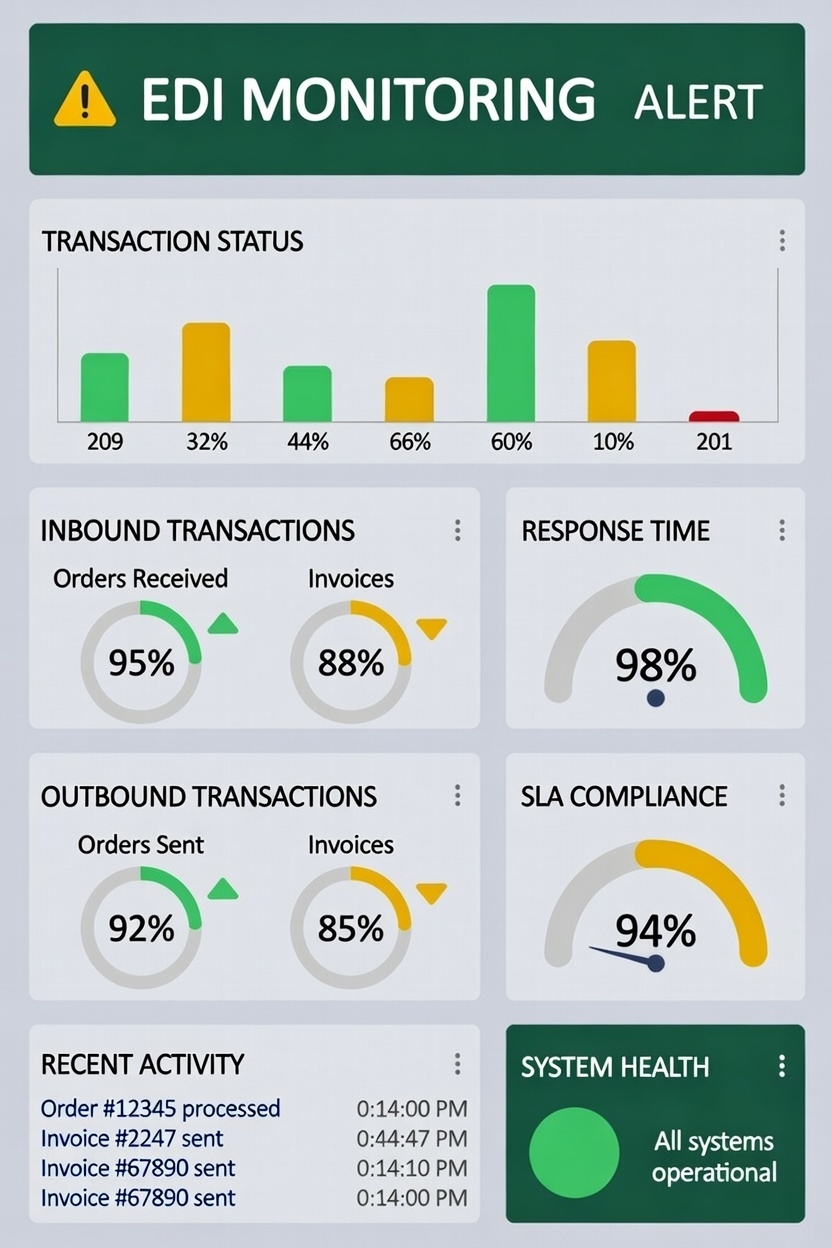
EDI failures don’t show up as obvious outages—they surface as missing ASNs, delayed invoices, or partner complaints.
A strong provider offers:
- 24/7 monitoring with proactive alerts
- Defined response and resolution SLAs
- Clear escalation paths
- Visibility into transaction status and exceptions
4) Understand the True Cost Model
EDI outsourcing pricing varies widely. The key is predictability.
Clarify:
- What’s included in base pricing
- How partner onboarding is priced
- How volume changes affect cost
- What triggers change fees
The goal is to avoid replacing internal cost volatility with vendor cost volatility.
5) Assess ERP Integration Depth
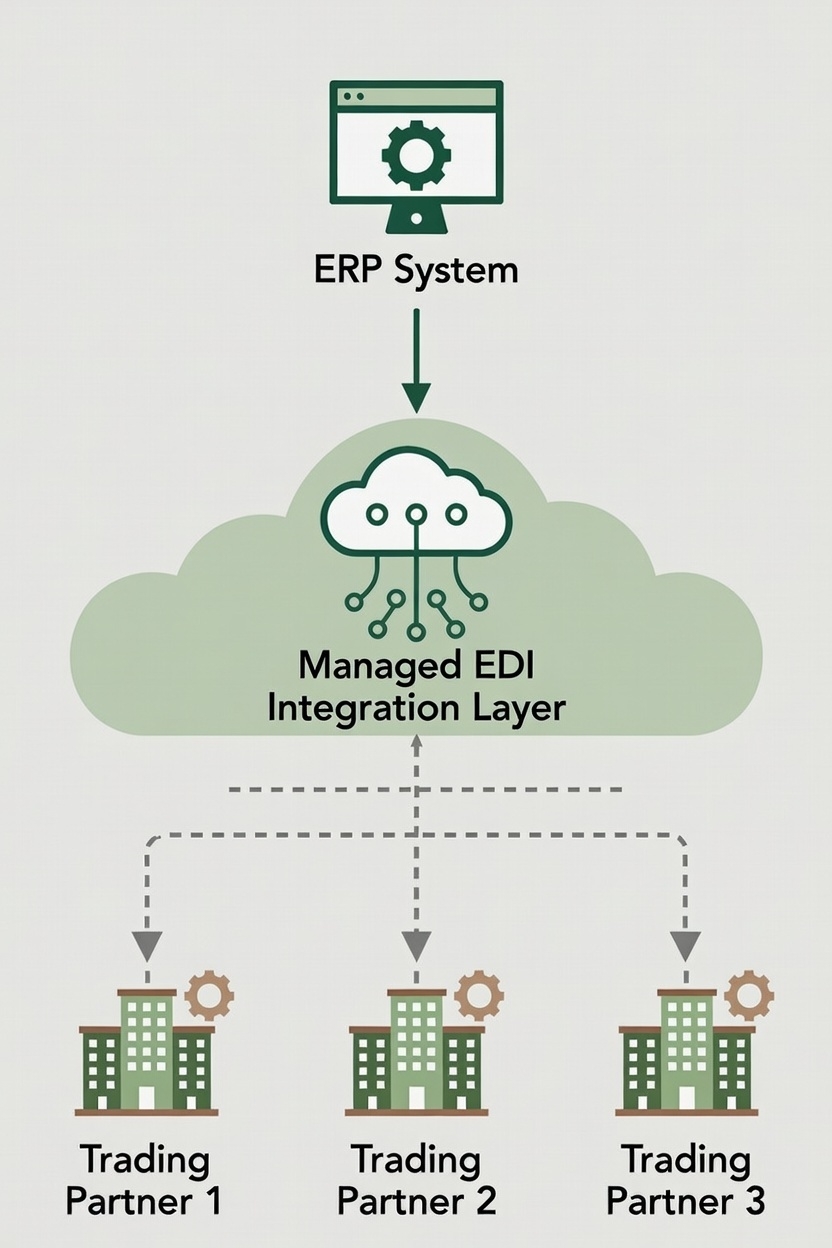
EDI doesn’t live in isolation. Ask how the provider integrates with your ERP:
- Validation before data hits the ERP
- Error handling and exception routing
- Support for upgrades and ERP changes
Shallow integrations increase downstream clean-up and manual intervention.
6) Use a Shortlist Decision Framework
When comparing finalists, score each provider on:
- Operational coverage
- Partner onboarding maturity
- Monitoring and SLAs
- ERP integration capability
- Commercial transparency
- Security and compliance posture
Conclusion
Choosing an EDI outsourcing partner is about more than reducing IT workload. It’s about building a stable, scalable foundation for order-to-cash operations.
Next step: Talk with our team to review your partner landscape and determine whether managed EDI is the right operating model for your organization.
Comments are closed